Beijing and Shanghai Retail Consumption Continues to Shrink; First-Tier City Consumption Outlook Raises Concerns

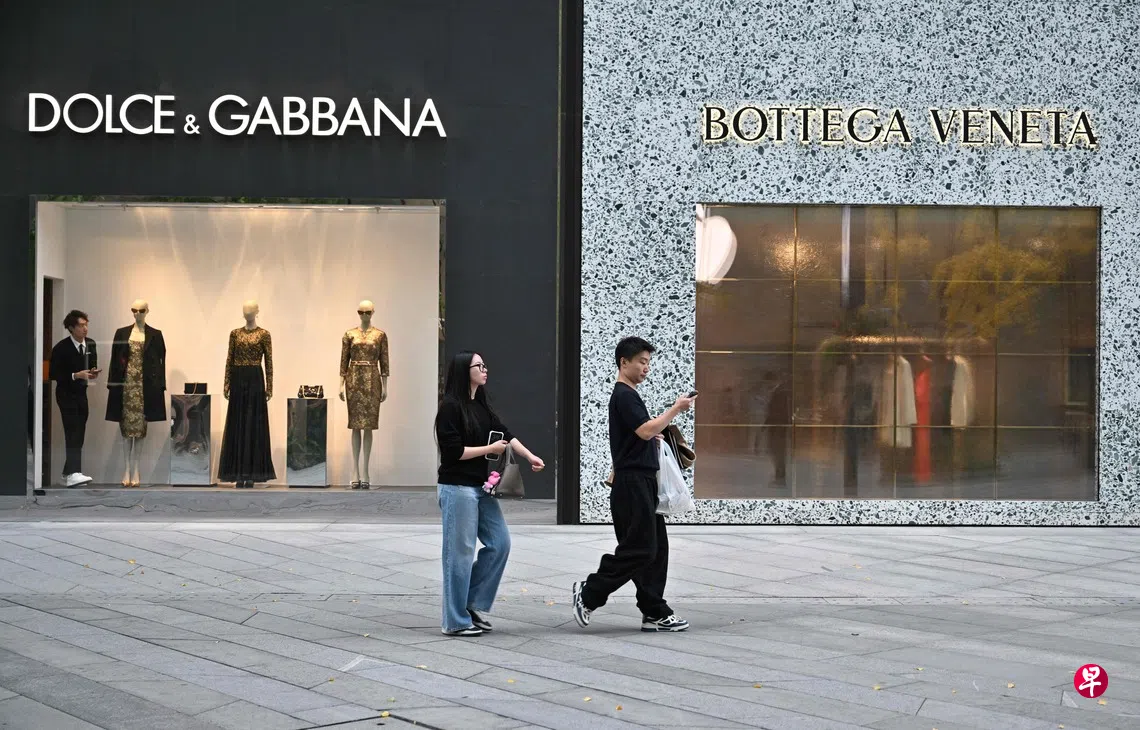
Commodity consumption in Beijing and Shanghai continues to shrink.
Beijing's retail sales of consumer goods in October plunged 12.1% year-on-year, while Shanghai recorded negative growth for seven consecutive months with a 4.5% decline, triggering concerns about consumption contraction in China's first-tier cities.
Scholars interviewed analyzed that the weak consumption in Beijing and Shanghai, apart from being dragged down by declining auto sales, is fundamentally related to unstable household income and employment expectations.
However, retail sales data fail to fully reflect growth in service consumption.
China's National Bureau of Statistics released industrial, retail and investment data on Monday (November 16), among which October's total retail sales of consumer goods (referred to as retail sales) stood at 4.6463 trillion yuan (RMB, same below, about 897.28 billion Singapore dollars), a slight year-on-year increase of 0.4%.
Provinces and municipalities subsequently released their local October consumption data, with Beijing and Shanghai's retail sales performance significantly underperforming the national level.
Based on data released by the Beijing Municipal Bureau of Statistics, Beijing's October retail sales totaled about 127.1 billion yuan, a sharp year-on-year drop of 12.1%.
Shanghai Statistics Bureau data showed October retail sales totaled 147.8 billion yuan, down 4.5% year-on-year, recording negative growth for seven consecutive months.
By comparison, China's other two first-tier cities, Guangzhou and Shenzhen, showed relatively steady retail sales performance.
In the first three quarters, Guangzhou and Shenzhen's total retail sales grew 2.5% and 2.3% year-on-year respectively, higher than the national increase of 1.1%.
Weak auto sales are an important factor dragging down Beijing and Shanghai's retail sales performance.
Beijing's retail sales of automotive commodities fell 20.7% year-on-year in the first 10 months; Shanghai's decline over the same period was 21.1%, with the single-month October decline reaching as high as 39.4%.
However, weakening auto sales are not unique to Beijing and Shanghai.
Data show that national October retail sales grew 0.4% year-on-year, but excluding automotive commodities, the increase reached 2.5%, indicating that weak auto consumption significantly drags down national retail data.
Some public opinion has noted that Beijing and Shanghai, as first-tier cities with China's highest household incomes, should play a greater role in expanding domestic demand, yet commodity consumption continues to shrink, reflecting that consumer confidence in first-tier cities remains under pressure and also mirroring the challenges China faces in boosting domestic demand.
Su Jian, professor at Peking University's School of Economics and director of the National Economic Research Center, told Lianhe Zaobao in an interview that Beijing and Shanghai's retail sales underperforming the national level may have three reasons.
First, retail sales data mainly reflect physical consumption, and it cannot be ruled out that service consumption by Beijing and Shanghai residents is growing faster but not reflected in retail sales data.
Second, in the first three quarters of this year, per capita disposable income growth for Beijing and Shanghai residents was lower than the national level, which may be the fundamental factor suppressing consumption.
Finally, from population data, the outflow of migrant populations from the two cities in recent years may also inhibit upward momentum in consumption growth.
Su Jian pointed out that consumption is a function of income, and the fundamental reason for Beijing and Shanghai's relatively weak consumption remains unstable household income and employment expectations. "Falling housing prices and unstable employment and income have dealt a relatively large blow to consumption by first-tier city residents." However, weak retail sales data do not mean people are comprehensively cutting back on consumption.
Data show that Beijing's service consumption still grew 4.3% year-on-year in the first 10 months of this year.
Su Jian explained that per capita consumption expenditure in Beijing and Shanghai still achieved year-on-year growth, and given the sharp decline in physical consumption, it can be indirectly inferred that service consumption such as culture and tourism has grown.
Although sluggish consumption in Beijing and Shanghai has triggered concerns among some public opinion about the prospects for China's consumption recovery, an article titled "Megacities Enter a Consumption Gear-Shift Period" published earlier this month by International Finance News, affiliated with China's official media People's Daily, offered a more optimistic interpretation from the perspective of consumption structure transformation.
The article noted that the turn to negative total retail sales in Beijing and Shanghai is easily interpreted as a signal of weakening consumption, but the main drag comes from autos and does not mean residents have stopped consuming.
The article described the consumption changes in Beijing and Shanghai as actually a microcosm of China's domestic demand transformation: "When growth space for physical goods narrows, service consumption takes over to provide support, and megacities are the first to complete this round of consumption gear-shifting."
Comments (0)