Dai Qingsheng: The Shenzhen APEC Summit—What Did Hong Kong Miss?

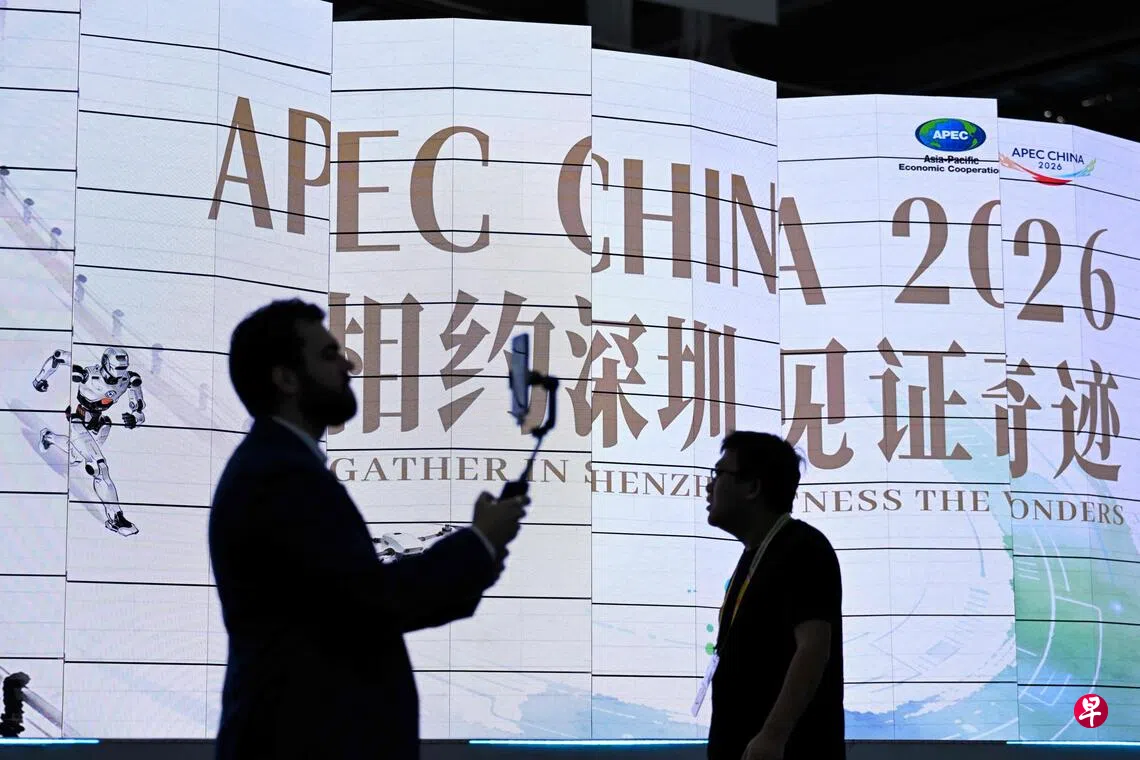
The Asia-Pacific Economic Cooperation (APEC) Economic Leaders' Meeting, which drew global attention, concluded last Thursday (November 19) in Shenzhen. A foreign journalist friend contacted me after finishing his coverage of the summit, saying he planned to stop by Hong Kong on the way and asked me to meet for a meal. This friend has loved Hong Kong since childhood and knows its history and culture inside out. On this rare return visit, he toured around enthusiastically, full of curiosity at every stop, frequently picking up his camera to take photos and taking in the local customs of this international city. But when it came to accommodation costs, my friend could not help venting—he was staying at a boutique hotel in the old district of Sham Shui Po, and to his surprise the room rate was about HK$1,500 (S$256) per night, nearly double the usual price.
His remarks reminded me that Hong Kong's economic recovery has fallen short of expectations in recent years, and the Hong Kong government has proposed developing a "ticket-tail economy," hoping that after tourists attend concerts, sports events or large exhibitions, they can use their tickets to enjoy discounts on hotels, dining and shopping, and extend their stay in Hong Kong.
The policy's intent is to attract visitors and increase their spending in Hong Kong, and the direction is entirely right. The problem is that Hong Kong seems to place too much emphasis on mega-events held locally and overlooks the fact that large international events held in neighboring cities can likewise bring Hong Kong a "ticket-tail economy." The Shenzhen APEC Summit is a good example.
This year's APEC Economic Leaders' Meeting was held in Shenzhen from November 18 to 19. With leaders of major countries such as China, the United States and Russia attending, the summit drew intense international attention. According to official figures, Shenzhen provided interview services to nearly 5,000 Chinese and foreign journalists, a record high for the number of journalists at any APEC meeting China has hosted.
Besides media personnel, the APEC CEO Summit held during the same period also attracted more than 2,000 political and business figures, including corporate representatives from the 21 APEC economies as well as other economies such as Europe and the United States. In other words, within just a few short days, Shenzhen gathered a group of international media and business elites that are not easily accessible in ordinary times.
This is undoubtedly a great opportunity for Shenzhen to showcase its urban development achievements to the world. For Hong Kong, just across the river, this grand event is likewise a golden opportunity to leverage for tourism development. Transport between Hong Kong and Shenzhen is very convenient—it takes only about ten minutes by high-speed rail from Shenzhen to Hong Kong. For foreign journalists and businesspeople who have come from afar, spending a day or two touring Hong Kong after the meeting would not only let them enjoy food, shopping and sightseeing, but also allow them to return home via Hong Kong International Airport.
In fact, Hong Kong's tourism industry already captured some business opportunities during the summit. Some APEC participants chose to stay in hotels in Tsim Sha Tsui, Jordan and West Kowloon, commuting daily by high-speed rail to and from Shenzhen, bringing business to some hotels. According to Hong Kong media reports, these guests mainly valued Hong Kong's convenient transport and accommodation conditions and decided to come on their own. Had the Hong Kong government been more proactive, even more Hong Kong hotels and restaurants would likely have benefited.
For example, the Hong Kong Tourism Board could have contacted the Shenzhen organizers before the APEC Summit to provide Hong Kong tourism information to foreign journalists covering the event, and jointly with hotels, restaurants and attractions to offer exclusive discounts. With their APEC press credentials, foreign journalists could enjoy hotel room discounts, attraction offers, or even free city tours.
For businesspeople, a two-day, one-night travel package could be offered, arranging visits to the Central financial district, the West Kowloon Cultural District and other distinctive Hong Kong attractions. Such arrangements would not necessarily require the government to spend large sums of money; as long as it plays a coordinating role and encourages business participation, there is a chance to attract more overseas visitors.
In recent years, Hong Kong's international image has been affected by numerous political controversies, and the Hong Kong government has been eager to strengthen external publicity and tell Hong Kong's story well. With a large number of foreign businesspeople and journalists gathered in Shenzhen, proactively inviting them to visit Hong Kong would be a good approach. Of course, one should not naively expect that these people will automatically speak well of Hong Kong after a few meals and a few nights in a hotel, but at least letting them see Hong Kong's actual situation firsthand is more persuasive than official publicity alone.
Unfortunately, judging at least from public information, the Hong Kong authorities did not launch any sizable dedicated tourism offers targeting the international media and businesspeople attending this APEC Summit.
To be fair, the Hong Kong government has not been entirely inactive. Since November this year, Hong Kong has extended the visa-free stay period for some holders of APEC Business Travel Cards from 60 days to 90 days to facilitate business travelers. But this is only an entry facilitation measure, and there is still a gap between it and proactively attracting summit participants to visit Hong Kong.
This also reflects another, deeper issue: although the strategy of building the Guangdong-Hong Kong-Macao Greater Bay Area has been proposed for years, coordination and cooperation among the cities in large international events still appear inadequate. In recent years, the governments of Guangdong, Hong Kong and Macao have frequently stressed the need to strengthen connectivity within the Greater Bay Area and promote complementary advantages among cities. However, such cooperation has often focused on hardware construction such as high-speed rail, highways and border clearance. As for how to share the business opportunities brought by large international events, there is still much room for development.
Take the Shenzhen APEC Summit as an example. Shenzhen was responsible for hosting political and business leaders and journalists from around the world; Hong Kong has advantages such as an international aviation hub and a blend of Chinese and Western cultures; and Macao has unique historic buildings, Portuguese culture and world-class hotel facilities. If the three governments had planned jointly half a year in advance and launched cross-city tourism routes, allowing foreigners attending the summit in Shenzhen to visit other Greater Bay Area cities along the way, this would not only increase tourism revenue in each place but also let foreign visitors experience the distinctive features of different Greater Bay Area cities within just a few days.
In the end, what the Guangdong-Hong Kong-Macao Greater Bay Area most needs to open up is probably not the roads between cities, but the thinking between governments.
Comments (0)