Taiwan's Nine-in-One Elections Enter Final Stretch: DPP Optimistic About Taipei and New Taipei Races, Worried Stock Market Drop Could Hurt

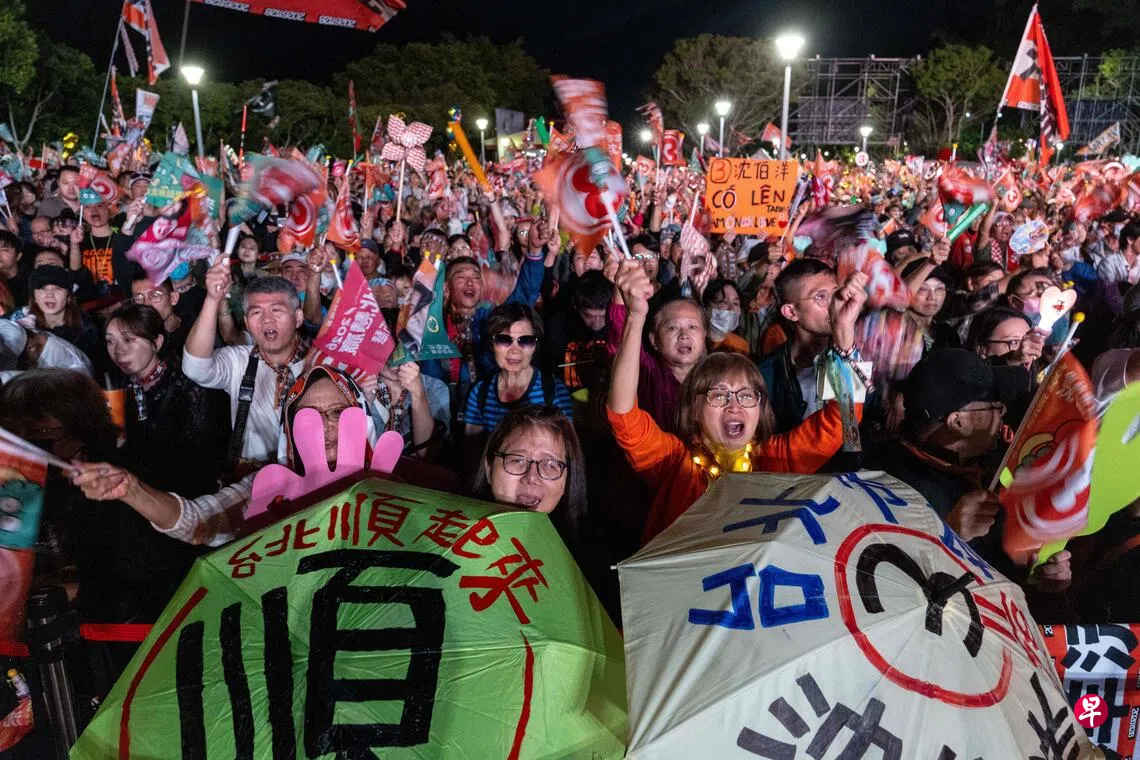
Taiwan's nine-in-one local elections will be held this Saturday (Nov. 28).
The DPP's internal assessment says this year's races in Taipei and New Taipei are the closest to victory it has seen, and it hopes to use them to expand its local governing map.
But a recent sharp drop in Taiwan's stock market, plus the KMT's fierce attacks over the Feitsui Reservoir solar power issue and central government policy controversies, have the green camp worried the race could shift.
According to Taiwan's United Daily News and China Times on Monday (Nov. 23), the DPP suffered a crushing defeat in the 2022 local elections, winning only five county and city mayor seats, its worst result since the party's founding.
This year it has nominated 19 county and city mayor candidates, hoping to hold its current five governing counties and cities while further expanding its local map, and even to double the number of places it governs.
The DPP is treating Taipei mayoral candidate Shen Po-yang and New Taipei mayoral candidate Su Chiao-hui as its main election force, hoping the "Yangliu Huiju" momentum the two have generated in Taipei and New Taipei will drive races in central Taiwan and other counties and cities.
Besides Taipei and New Taipei, the green camp has also listed Yilan, Changhua, Chiayi City and Hsinchu County as key targets to flip, while continuing to chase closely in Keelung and Taitung; the races in Pingtung and Chiayi County are relatively stable.
However, as the campaign enters its final stage, a recent sharp drop in Taiwan's stock market, plus the KMT's successive efforts to heat up controversies over the Feitsui Reservoir solar power project, the universal cash payout of NT$20,000 (about S$780), and the Executive Yuan's refusal to countersign a legislative amendment raising the old farmer allowance, have caused anxiety in the green camp's grassroots.
The Feitsui Reservoir controversy stems from the Water Resources Agency of Taiwan's Ministry of Economic Affairs sending letters in 2022, 2023 and 2024 for three consecutive years to investigate the possibility of adding solar power facilities.
Chiang Wan-an and KMT New Taipei mayoral candidate Li Ssu-chuan held a news conference on Nov. 19 to oppose installing solar panels at the Feitsui Reservoir and warned that doing so could endanger drinking water safety in the greater Taipei area.
Some DPP party and government figures believe the KMT is using these issues to mobilize supporters and turn out its base through hate-driven mobilization, aiming to divert attention from Taipei Mayor Chiang Wan-an's governance controversies, and that the actual impact is limited.
But other party and government figures worry that President Lai Ching-te has often cited stock market performance as a governing achievement, and that if the stock market continues to fall this week, it could weaken voters' confidence in the central government and even spur opposition supporters to vote, becoming the biggest variable before the election.
The KMT, for its part, is fighting to hold its current 15 governing counties and cities.
The blue camp assesses that although the races in Taipei and New Taipei are fierce, it still has a chance to hold them, with Taipei gradually stabilizing and New Taipei remaining a tug-of-war.
The races in Yilan, Hsinchu County, Changhua and Chiayi City are tight, and in the final stage it will concentrate forces on shoring up its base and courting undecided middle voters.
As for the Taiwan People's Party, this year it has nominated 64 county and city council candidates across Taiwan, with the goal of doubling its council seats.
The TPP assesses that its council seats are likely to rise slightly from the last election, but it still needs to strengthen grassroots mobilization in the final stage for the local executive races.
Comments (0)