Committee of 100 Urges Media to Report on Jensen Huang Case with Caution, Warns Against Casting Chinese American Community Under Suspicion - Sing Tao Daily

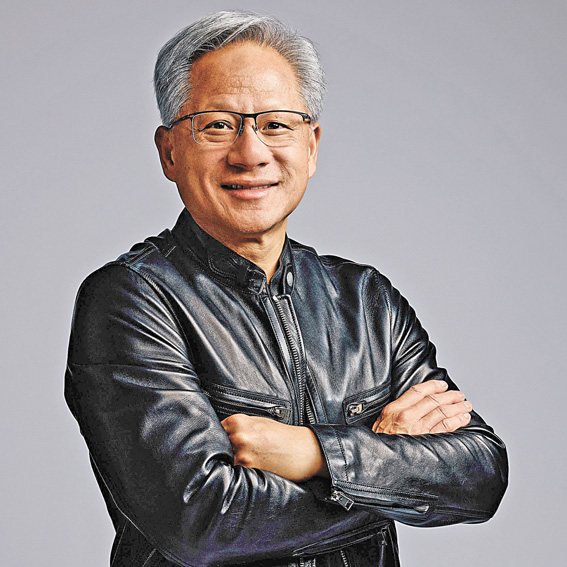
The Committee of 100 issued a statement on November 23 regarding recent reports involving Nvidia CEO Jensen Huang and allegations of Chinese espionage, calling on the media to strictly distinguish between facts, allegations, and speculation, and to avoid placing the entire Chinese American community under suspicion on national security grounds before the evidence is clear.
The statement noted that Nvidia's board decided on Monday to reinstate Jensen Huang as CEO.
Previously, The New York Times reported that U.S. officials believed a woman close to Huang was a Chinese intelligence operative.
Within just 25 days, the matter went through several twists—news exposure, Huang's resignation, and the board's decision to reinstate him—but whether the woman ever worked for Chinese intelligence remains disputed to this day.
The Committee of 100 said it takes no position on the board's decision to reinstate Huang or on the board's statement that the matter "does not constitute a national security risk." Its real concern is the way the media reported the story and the potential impact on the Chinese American community.
The statement cited a CNN report that U.S. officials hold differing views on whether the woman was ever recruited by Chinese intelligence and on the reliability of the relevant evidence.
The Washington Post reported that the Secretary of State used more definitive language than the original intelligence assessment when describing the CIA's suspicions.
The Committee of 100 believes these questions merit thorough investigation, but the media must clearly set out the known facts, unverified allegations, and points of disagreement.
The Committee of 100 stressed that it supports press freedom and the media's role in holding power to account, but news reporting also shapes public perceptions of ethnic groups.
The statement listed three historical cases to remind the media that imprecise national security reporting can cause lasting harm.
In 1942, during World War II, newspapers including the Los Angeles Times and the San Francisco Examiner questioned the loyalty of Japanese Americans, helping to foster public support for the mass internment of Japanese residents.
The Los Angeles Times editorial board later described its relevant editorials from that time as "our lasting shame." In 1999, Chinese American scientist Wen Ho Lee of Los Alamos National Laboratory was accused of espionage and held in solitary confinement for nine months.
Prosecutors ultimately dropped 58 of the 59 charges against him; he pleaded guilty to only one count of mishandling data, and the judge apologized for the treatment he received.
The New York Times later acknowledged shortcomings in its initial reporting, saying some articles did not meet journalistic standards.
In 2014, Chinese American hydrologist Sherry Chen of the National Weather Service was arrested by federal agents on suspicion of stealing sensitive government data, but prosecutors dropped all charges before trial, and the U.S. government later paid her about $1.8 million in a settlement.
The Committee of 100 noted that it cites these cases not because it believes the Huang incident is identical to them, but to remind the media that inaccurate or insufficiently rigorous reporting not only harms the individuals involved but can also perpetuate ethnic stereotypes and undermine public trust in the press.
The statement said that from the Chinese Exclusion Act to the more recent China Initiative, Chinese Americans and Chinese immigrants have long faced questions about their loyalty.
Allegations against individuals should not become grounds for questioning all 5.5 million Chinese Americans nationwide.
The media must clearly distinguish between the Chinese government, Chinese citizens, and Chinese Americans, and must not conflate them.
The Committee of 100 also offered seven recommendations to reporters and editors: strictly distinguish facts, assumptions, and allegations; ensure headlines match the evidence and do not prejudge cases; disclose anonymous sources and their possible motives; carefully evaluate information provided by government officials and intelligence agencies; distinguish between the Chinese government, Chinese citizens, and Chinese Americans; update reporting promptly as new evidence emerges, and prominently disclose it even when new information overturns earlier conclusions; and follow the Asian American Journalists Association's national security reporting guidelines, avoiding wordplay based on Asian surnames.
The Committee of 100 concluded by reiterating that press freedom and the media's watchdog responsibility are equally important, and that reporting involving national security must above all be accurate, cautious, and fair—pursuing the truth while avoiding unverified allegations that expose innocent people and an entire community to bias and harm.
Reported by Sing Tao Daily reporter Zhou Jingran in New York.
Jensen Huang
Comments (0)