He Lifeng to Travel to Canada to Chair Second China-Canada Economic and Financial Strategic Dialogue

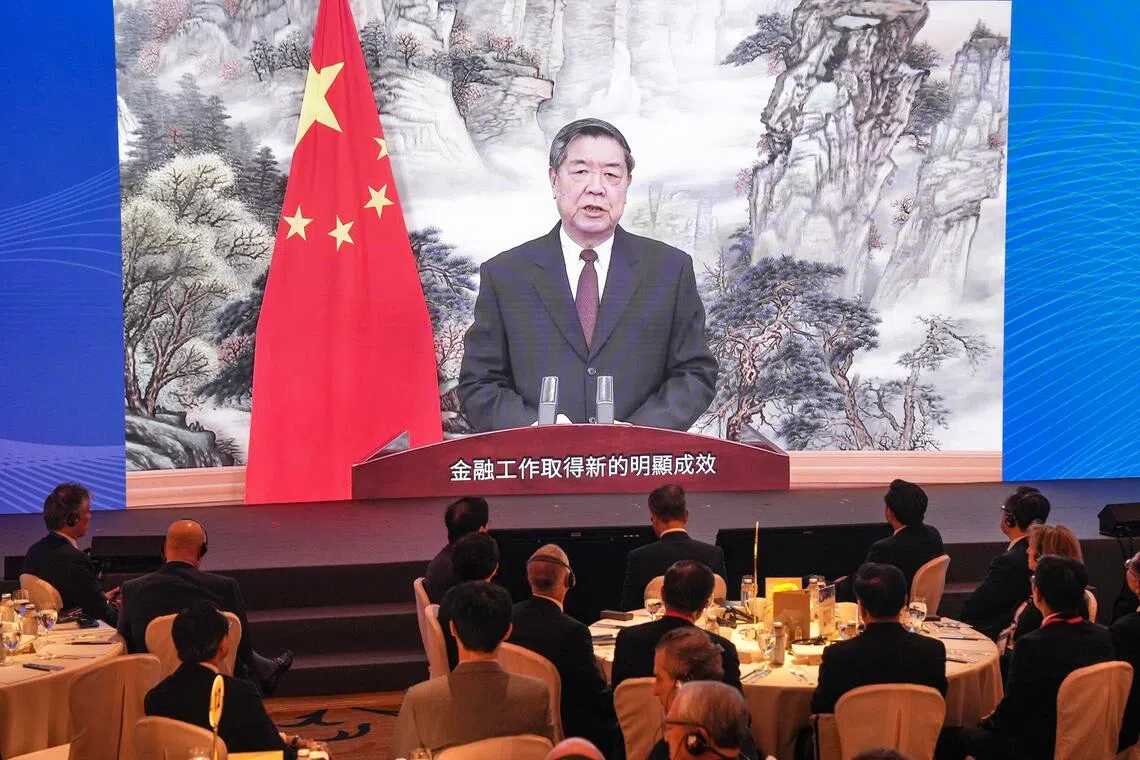
As China-Canada relations grow increasingly close, He Lifeng, member of the Political Bureau of the CPC Central Committee and Vice Premier of the State Council, will travel to Canada to chair the second China-Canada Economic and Financial Strategic Dialogue.
Chinese Foreign Ministry spokesperson Guo Jiakun announced at a regular press conference on Friday (November 6) that, as agreed by both sides, the second China-Canada Economic and Financial Strategic Dialogue will be held in Canada on November 9.
He Lifeng, the Chinese lead of the dialogue, will co-chair the dialogue with the Canadian leads, Finance Minister François-Philippe Champagne and International Trade Minister Maninder Sidhu.
The first China-Canada Economic and Financial Strategic Dialogue was held on November 12, 2018, at the Diaoyutai State Guesthouse in Beijing, and was co-chaired by then Chinese State Councilor Wang Yong, then Canadian Finance Minister Bill Morneau and then Minister of International Trade Diversification Jim Carr.
During the first dialogue, the two sides held in-depth discussions on topics including the macroeconomic situation and global economic governance, trade and investment cooperation, and financial cooperation, and sent a signal that they would work together to safeguard the multilateral system and economic globalization.
China and Canada jointly launched this dialogue mechanism in April 2017.
It was not continued for a period after the arrest of Meng Wanzhou, daughter of Huawei founder Ren Zhengfei, which brought China-Canada relations to a low point, and it was only decided to restart the mechanism when Chinese and Canadian leaders met in January this year.
Ahead of the second China-Canada Economic and Financial Strategic Dialogue, Chinese Commerce Minister Wang Wentao and Canadian International Trade Minister Maninder Sidhu co-chaired the 29th China-Canada Joint Economic and Trade Committee meeting in Beijing on Tuesday (November 3), holding "candid and in-depth exchanges" on China-Canada economic and trade relations, cooperation in traditional and emerging fields, and each other's economic and trade concerns.
In a news release issued after the meeting on Wednesday (November 4), the Canadian government announced that China and Canada agreed to extend mutual tariff exemptions until the end of 2028.
In March last year, China imposed tariffs on some Canadian agricultural products and seafood in response to Canada's tariffs on Chinese steel, aluminum and electric vehicles.
During Canadian Prime Minister Carney's visit to China in January this year, he and Chinese President Xi Jinping finalized a mutual tariff exemption agreement, which had originally been set to expire on December 31 this year.
This means that Canadian products such as canola meal, peas, lobster and crab will continue to enjoy lower Chinese import tariffs for the next two years.
After Prime Minister Carney's visit to China in January, China resumed imports of Canadian beef.
Canada also extended tariff relief measures on Chinese steel and aluminum products until the end of 2028.
During his visit to China, Carney also announced that Canada would allow imports of up to 49,000 Chinese electric vehicles per year, subject to a most-favored-nation tariff rate of 6.1%.
Comments (0)