Both Parties' 2028 Presidential Race Planning Kicks Off Early - Sing Tao Daily

Even before all votes in the U.S. midterm elections have been fully counted, political maneuvering for the 2028 presidential race has already begun.
After a major victory in the midterms, several Democratic governors and political figures are raising their national profiles to pave the way for possible presidential runs; meanwhile, the Republican Party faces political realignment after a crushing defeat, and Vice President JD Vance, once seen as the leading presidential contender, is under pressure following election losses driven by the Iran war.
According to the Associated Press, potential contenders for the 2028 presidential nominations from both parties began mapping out their political futures on the 4th.
The first presidential primary vote is expected to be held in just over a year, and some potential candidates have already begun reaching out to people who could join their campaign teams, including Arizona Senator Mark Kelly and Kentucky Governor Andy Beshear.
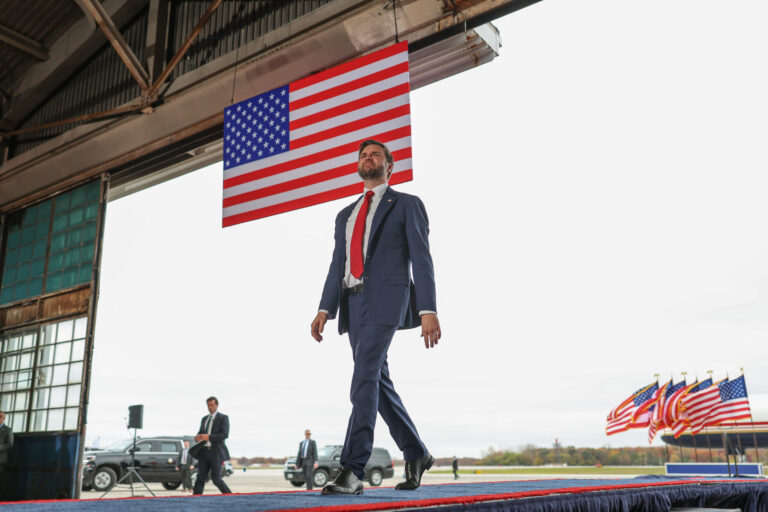
Vance Faces Pressure Within the Republican Party Vance had been seen as the Republican Party's most promising presidential candidate to succeed Trump, but the midterm results have added uncertainty to his political future.
In a post on X on the 4th, he directly blamed the Republican defeat on the Iran war and did not defend Trump's war with Iran.
Vance said the reason Republicans lost was the war, and that anyone who believes the war was worth the cost of losing control of the Senate for the next six years should make that argument honestly.
He stressed that any serious discussion of the Republican Party's future direction must begin with the Iran war.
Several Democratic Governors Emerge On the Democratic side, the election victory has boosted the political standing of several potential presidential candidates.
Maryland Governor Wes Moore and Illinois Governor JB Pritzker both won re-election and displayed national political ambitions in their victory speeches.
California's outgoing Governor Gavin Newsom actively helped Democratic candidates nationwide and spearheaded California Proposition 50 in response to Texas Republicans' congressional redistricting, helping Democrats pursue a House majority.
Pennsylvania Governor Josh Shapiro won a landslide victory in the election, not only securing re-election in a key swing state but also helping Democrats take control of the state legislature and flip four congressional seats.
In a television interview on the 4th, Shapiro was asked directly whether he intended to run for president in 2028.
He did not answer directly, saying only that voters are demanding fundamental change and practical reform, and that they want leaders who can truly deliver results.
A new generation of Democratic senators could also become presidential contenders, including Georgia Senator Jon Ossoff and newly elected Michigan Senator Abdul El-Sayed.
Progressives have begun discussing who can succeed 85-year-old Vermont Senator Bernie Sanders, who has ruled out another presidential run, as the standard-bearer of progressive politics.
New York Congresswoman Alexandria Ocasio-Cortez remains a leading figure in those discussions.
Other Republicans Seek Opportunities On the Republican side, the crushing midterm defeat could create openings for Trump's former intra-party rivals.
Outgoing Florida Republican Governor Ron DeSantis described on the 4th the Republican losses across many parts of the country as an almost "extinction-level event," but stressed that Florida still successfully elected a Republican governor and U.S. senator, which could serve as a showcase of achievements.
Texas Senator Ted Cruz has also been considering another White House bid and has devoted considerable time and resources to helping Republican candidates, especially in Texas races.
New Jersey Governor Chris Christie, a fierce critic of Trump, may also seek the presidential nomination for a third time.
On the Democratic side, New Jersey Senator Cory Booker said in his victory speech that the end of the election should mark the beginning of a new political movement.
His federal campaign account already holds more than $20 million, which observers see as an important signal that he may enter the 2028 presidential race.
News and cover image source: Vice President JD Vance had been seen as the Republican Party's most promising presidential candidate to succeed Trump, but the midterm results have added uncertainty to his political future.
AP.
California Governor Gavin Newsom (right) after voting, with California First Partner Jennifer Siebel Newsom placing an "I Voted" sticker on his collar.
AP
Comments (0)