Democrats Win Both Chambers of Congress; Scholar: China-U.S. Constructive Strategic Stability May Face a Test

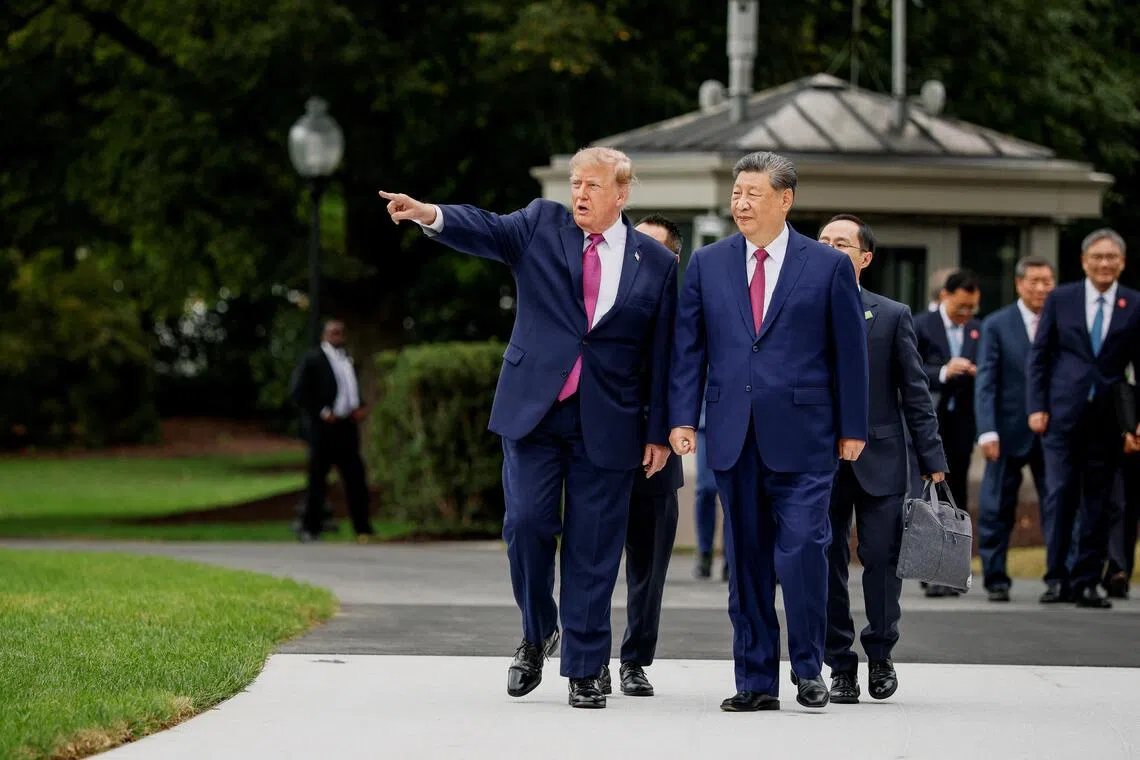
Republicans suffered a crushing defeat in the midterm elections, with Democrats winning majority seats in both chambers of Congress.
U.S. scholars interviewed believe Trump's China policy will face greater political constraints, and differences between the White House and Congress on Taiwan, technology, and economic security issues may deepen, putting the China-U.S. "constructive strategic stability" relationship to the test; the Shenzhen APEC summit will become an important window for observing the direction of China-U.S. relations.
Chinese scholars believe U.S. voters are more focused on the cost of living and rising prices, and China is not the core issue of this election.
Although the Democratic victory constitutes a political blow to Trump, it will not fundamentally change the basic trajectory of China-U.S. relations.
The U.S. midterm elections have also drawn attention in Chinese public opinion.
Topics such as "Trump says midterm elections did not hurt him" briefly trended on Weibo on Wednesday (November 4).
The Shanghai Composite Index also rose 2.2% that day, its largest single-day gain in seven months.
A Reuters analysis noted that, in addition to support measures from the Chinese government boosting the market, news of the Democratic victory also served as a catalyst for Chinese investors to buy on dips.
Chinese Foreign Ministry spokesperson Mao Ning did not directly comment on the election's impact on China-U.S. relations at a regular press conference on Wednesday, only stressing that China is willing to work with the United States to implement the important consensus reached by the two heads of state, strengthen communication, properly handle differences, expand cooperation, and build a constructive strategic stability relationship between China and the United States.
Denis Simon, a senior research fellow at the Quincy Institute in the United States, analyzed for Lianhe Zaobao that Democratic control of Congress "will not necessarily end the China-U.S. constructive strategic stability relationship," but will make this goal "harder to achieve and sustain." Trump wants to preserve diplomatic flexibility toward China, while Congress may strengthen institutional constraints to prevent the United States from making excessive concessions to China.
Trump may have room to negotiate with Xi Jinping, but may not be able to guarantee that Washington implements every agreement.
Simon believes the differences are especially evident on arms sales to Taiwan and technology policy.
After Trump met with Xi Jinping in May this year, he suspended an arms sale package to Taiwan worth about $14 billion (S$17.9 billion).
Democrats may increase the political cost to Trump of delaying arms sales by strengthening congressional review, requiring the executive branch to explain the reasons for delays, and pushing legislation.
However, the initiation and approval of arms sales remain mainly in the hands of the executive branch, while Congress has the right to be notified, review arms sales, and legislate.
On technology, Democrats may tighten semiconductor export licenses, strengthen scrutiny of advanced AI chips and computing equipment, and restrict the transfer of sensitive technologies and Chinese investment in U.S. strategic industries.
However, Democrats are not internally unanimous, and some lawmakers are also concerned about the economic costs to U.S. companies and the consequences of excessive decoupling from China.
The APEC Economic Leaders' Meeting will be held in Shenzhen, China, from November 18 to 19.
Simon believes Trump may seek increased Chinese purchases of U.S. agricultural products and energy, expanded market access for U.S. companies in China, and results on critical minerals and supply chain stability, but if the United States does not make reciprocal commitments on tariffs and technology restrictions, Beijing will be unwilling to make major concessions.
Sun Chenghao, an associate research fellow at the Center for Strategic and Security Studies at Tsinghua University, assessed that a possible China-U.S. heads-of-state meeting during APEC will become an "important node" for testing whether China-U.S. constructive strategic stability can withstand changes in U.S. domestic politics.
Trump may seek to expand U.S. exports to China, reduce trade uncertainty, and stabilize critical mineral supplies, but this does not mean his stance toward China will necessarily soften.
Sun Chenghao stressed that the key is whether the heads-of-state consensus can be implemented, rather than merely improving the atmosphere on the day of the meeting.
Whether the two sides can continue tariff reductions, trade and investment mechanisms, and AI dialogue is also worth watching.
He believes cost-of-living pressures may limit Trump from imposing further tariffs, while advanced chip export restrictions are more likely to gain bipartisan support.
Trump may also push forward economic and trade arrangements by the end of this year before the new U.S.
Congress convenes on January 3 next year, and may announce arms sales or tighten restrictions on China after the two heads of state meet, in response to domestic criticism that he is "making concessions to China." Zhu Feng, executive director of the China Center for Collaborative Studies of the South China Sea at Nanjing University, and Luo Minghui, an associate professor of public policy and global affairs at Nanyang Technological University in Singapore, both believe that the Democratic victory of majority seats in both chambers of Congress will not fundamentally change the trajectory of China-U.S. relations.
Zhu Feng said that a China-U.S. constructive strategic stability relationship serves the interests of both sides, and Democrats are also clear about this; Trump's transactional diplomatic style will not change, and China has never held excessive expectations of Trump.
For Beijing, "the most important thing is to adhere to its own development strategy and avoid falling into a vicious cycle of major-power competition." Luo Minghui pointed out that the two U.S. parties have a considerable degree of consensus on China strategy, and even if Trump is a "lame duck" over the next two years, there will be no major change in U.S.
China policy; China will continue to value heads-of-state diplomacy while also looking ahead to the next U.S. presidential election and the longer-term China-U.S. relationship.
He believes that if Trump and Xi Jinping meet during APEC, it will demonstrate the continuation of China-U.S. constructive strategic stability, rather than a test.
Comments (0)